Forged Shafts in Automotive Powertrains: Ensuring Reliability Under Extreme Loads
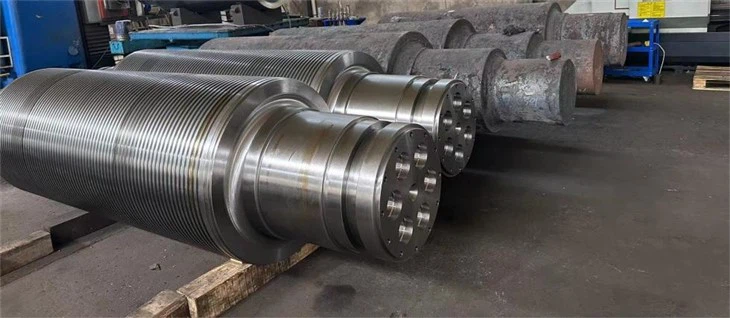

In the demanding environment of modern automotive engineering, few components face as much mechanical stress as the shafts within a powertrain. These elements must transmit torque, endure rotational fatigue, and withstand dynamic loads in conditions that often push materials to their limits. Forged shafts have become the industry standard for meeting these challenges, offering a balance of strength, durability, and cost efficiency that ensures long-term reliability.
The Critical Role of Shafts in Powertrains
Automotive powertrains—encompassing the engine, transmission, and driveline—rely on shafts to transfer rotational energy between systems. Crankshafts convert linear piston motion into rotation, camshafts control valve timing, and transmission shafts deliver torque to the wheels. Each type operates under unique loading conditions: high-frequency torsional vibrations, cyclic bending stresses, and sudden torque spikes caused by acceleration or braking.
Failures in these shafts can cause catastrophic damage, not only halting vehicle function but also risking driver safety. For this reason, manufacturers demand materials and processes that guarantee mechanical integrity under extreme operating environments. Forging, with its ability to refine grain structure and eliminate voids, has become the preferred method of shaft production.
Why Forging Outperforms Other Manufacturing Methods
Unlike machining from bar stock or casting, forging compresses and realigns the metal’s grain structure to follow the geometry of the shaft. This results in superior fatigue resistance, impact strength, and dimensional stability.
- Strength: Forged shafts maintain higher tensile and yield strength, enabling them to endure repetitive stress cycles.
- Durability: The directional grain flow minimizes the risk of fracture or microcracks spreading under load.
- Consistency: Forging eliminates porosity, inclusions, or weak points commonly found in cast shafts.
In high-performance or heavy-duty vehicles, where torque demands exceed conventional passenger car requirements, the advantages of forged shafts become even more pronounced.
Materials Used in Forged Shafts
The choice of alloy is as critical as the forging process itself. Medium-carbon and alloy steels—such as 4140, 4340, and 8620—are frequently used due to their balance of hardness, machinability, and fatigue strength. Heat treatments, including quenching and tempering, further enhance mechanical properties. Surface hardening techniques like nitriding or carburizing add resistance to wear and surface fatigue, extending service life even under severe conditions.
Applications Across Automotive Segments
Forged shafts are present in nearly every category of vehicles:
- Passenger Cars: Crankshafts and camshafts for smooth engine operation and durability.
- Commercial Vehicles: Heavy-duty transmission and axle shafts designed for hauling and towing.
- Performance Vehicles: High-precision forged driveshafts and half-shafts that can handle extreme acceleration loads.
- Electric Vehicles (EVs): Though EVs eliminate internal combustion engines, forged shafts remain essential in reduction gears and driveline assemblies.
In each segment, the use of forged shafts directly translates into reduced maintenance costs, fewer breakdowns, and enhanced overall reliability.
Partnering with Specialized Manufacturers
For automakers, ensuring the quality of forged shafts depends heavily on the capabilities of their suppliers. Partnering with a mechanical parts manufacturer that specializes in forging can provide not only consistent quality but also design flexibility.
Advanced facilities offering custom metal forging services are able to tailor shaft geometry, dimensions, and material properties to specific powertrain needs. This customization is particularly valuable as vehicles shift toward electrification, lightweighting, and higher efficiency requirements. Precision forging technology allows manufacturers to produce shafts with tight tolerances, reduced weight, and optimized performance characteristics.
Meeting the Challenges of Extreme Loads
The most demanding conditions for automotive shafts occur under peak torque loads, abrupt load reversals, and high rotational speeds. Forged shafts rise to these challenges due to their inherent toughness and structural integrity. By resisting deformation and fatigue, they protect surrounding components, maintain drivetrain alignment, and prevent premature failures.
Furthermore, the economic benefits cannot be ignored. While forged shafts may carry a higher initial production cost compared to cast or machined alternatives, the savings in warranty claims, downtime, and maintenance justify the investment. Over the lifecycle of a vehicle, forged shafts contribute to both performance and profitability.
Conclusion
In an industry that constantly evolves toward greater efficiency, power, and sustainability, forged shafts remain a cornerstone of reliable powertrain design. Their unmatched strength, fatigue resistance, and adaptability make them indispensable across passenger, commercial, and performance vehicles. By leveraging the expertise of a capable mechanical parts manufacturer and utilizing advanced custom metal forging services, automakers ensure that their vehicles deliver dependable performance under the most extreme conditions.