Protective Film Solutions for Automotive Glass, Displays, and Touch Panels
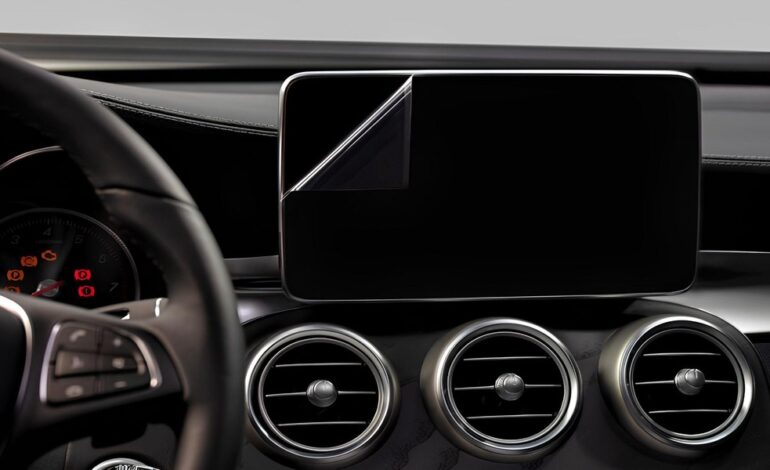

From panoramic windshields and head-up displays to infotainment screens and touch panels, today’s automotive surfaces are highly functional yet increasingly delicate.
As these components become more advanced, the need for effective protective film solutions has grown significantly.
Protective films play a critical role in preserving surface integrity, enhancing durability, and maintaining long-term performance across automotive glass, displays, and touch interfaces.
The Growing Need for Surface Protection in Automotive Applications
Automotive surfaces face a wide range of environmental and mechanical challenges. Glass components must withstand UV exposure, rain, debris, and temperature fluctuations, while interior displays and touch panels are exposed to constant physical interaction, fingerprints, and abrasion.
Touch-sensitive systems, in particular, are vulnerable. These interfaces rely on precise sensing layers integrated into display structures, meaning even minor scratches or contamination can impact functionality. Protective materials are therefore designed to shield these sensitive layers from scratches, impacts, dust, and chemical exposure without compromising clarity or responsiveness.
Protective Films for Automotive Glass
Automotive glass protection has evolved beyond traditional coatings. Advanced protective films now offer multi-functional benefits:
Key Functions:
- Impact Resistance: Films absorb minor impacts from road debris, reducing the risk of chips or cracks.
- Hydrophobic Properties: Water-repellent coatings enhance visibility by making water bead up and slide off the surface.
- UV Protection: Films shield against harmful UV rays, safeguarding both passengers and interior materials.
- Scratch Resistance: Durable top layers protect against abrasion from wipers, dust, and cleaning.
These films are particularly valuable for windshields, side windows, and increasingly for glass roofs in electric and premium vehicles.
Protective Films for Automotive Displays
Automotive displays-such as infotainment systems, digital dashboards, and rear-seat screens-demand an optimal balance between surface protection and optical clarity.
Optical Clarity and Bonding
One of the most critical technologies in this area is optical bonding, which eliminates air gaps between layers to reduce reflection and improve contrast. This enhances visibility, especially under direct sunlight.
Additionally, adhesives such as liquid optically clear adhesive (LOCA) are used to bond protective layers while maintaining high transparency and durability.
Functional Benefits:
- Anti-glare & Anti-reflection: Improves readability in bright conditions
- Anti-fingerprint (oleophobic coatings): Reduces smudges and cleaning frequency
- Thermal Stability: Maintains performance under high cabin temperatures
- Impact Protection: Prevents surface damage from accidental contact
As vehicle displays become larger and more integrated, maintaining visual clarity without distortion is essential.
Protective Films for Touch Panels
Touch panels are among the most frequently used surfaces in modern vehicles. Their protection requires specialized materials that preserve both sensitivity and durability.
Material Types:
- PET Films: Cost-effective, lightweight, and optically clear
- TPU Films: Flexible, self-healing, and ideal for curved displays
- Tempered Glass Protectors: High hardness and impact resistance, though less flexible
For example, PET protection films are widely used in automotive interiors due to their ability to resist scratches while maintaining a smooth tactile experience and conforming to complex screen shapes.
Additional Features:
- Self-healing coatings: Minor scratches disappear over time
- Antimicrobial layers: Reduce bacteria on high-touch surfaces, improving hygiene in shared vehicles
- High transparency: Ensures no interference with display quality or touch sensitivity
These films must be engineered to maintain seamless interaction, as any degradation in touch response can negatively impact user experience.
Key Performance Requirements for Automotive Protective Films
To meet automotive standards, protective films must satisfy several critical performance criteria:
- Optical Excellence: High transparency with no distortion
- Adhesion Control: Strong enough to stay in place, yet removable without residue
- Durability: Resistance to heat, UV, chemicals, and mechanical wear
- Flexibility: Ability to conform to curved or complex surfaces
- Long-Term Stability: Maintain performance over years of use
In addition, films must integrate seamlessly into manufacturing processes, often applied through lamination or automated bonding systems.
Future Trends in Automotive Protective Film Technology
As automotive design continues to evolve, protective film technologies are advancing in parallel:
- Integrated Functional Films: Combining protection with sensing, heating, or display capabilities
- Ultra-thin Optical Layers: Supporting slimmer, more lightweight displays
- Self-healing & Smart Coatings: Enhancing durability and reducing maintenance
- Sustainable Materials: Development of eco-friendly and recyclable film solutions
With the rise of autonomous driving and fully digital cockpits, the importance of reliable, high-performance protective films will only increase.