Can AWD and 4WD Vehicles Be Towed? What You Need to Know

AWD and 4WD Vehicles, both are capable of providing traction to all four tires on the vehicle. They provide better traction and stability, which has made them popular throughout Australia. But they are different creatures when it comes to breaking down or being involved in an accident, with tow crews having to take special precautions.
Not all cars are created equal, so not all cars can be towed the same way, though most drivers would think that. Sadly, it is not the case for any AWD or 4WD models. The improper or wrong tow method will cause mechanical damages which are very costly to repair.
Towing AWD and 4WD Vehicles: Special Considerations
AWD and 4WD both involve power to more than two wheels which is different from a two-wheel drive vehicle. They have transfer cases, differentials, and drive shafts.
These parts can become stuck and continue moving without lubrication, when a vehicle is towed incorrectly. This can lead to significant axle wear and damage.
It is the reason behind professional car towing in Melbourne services using special equipment when transporting AWD and 4WD cars.
Not lifting and securing a vehicle correctly is bad in ways you can imagine, even with short distances. Staying within the towing limitations set by the manufacturer protects some extremely important hardware components and ensures that the vehicle gets to its destination without incurring any further damage besides what it may already have experienced.
Can You Tow an AWD Vehicle?
This depends on the manufacturer.
That’s why a lot of AWD vehicles shouldn’t be towed with two wheels off the ground. Handling it this way can stress out the drivetrain and transmission.
In most cases the safest options are:
- Flatbed towing
- Full vehicle transport trailers
- Manufacturer-approved towing methods
Previously, a dependable towing service Melbourne will always evaluate the car specifications prior to selecting an appropriate option for your solution.
What About 4WD Vehicles?
The same limitations impact plenty of 4WDs. Even so, some models incorporate a neutral position into the transfer case that enables safer towing.
Even then, however, drivers should never rely on the manufacturer’s designation for ‘towable’ without referencing the owner’s manual.
The following are factors that affect what you may need to tow:
- Vehicle make and model
- Transmission type
- Transfer case design
- Distance being towed
- Road conditions
These differences are known by professional operators who ply in processes for car towing Melbourne, thus eliminating needless damage.
Why Flatbed Towing is the Preferred Choice?
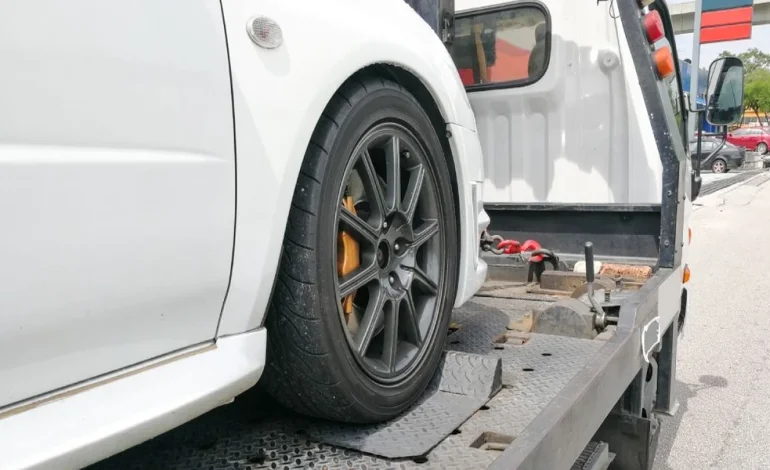
Flatbed towing is the generally accepted safest way to tow an AWD and 4WD vehicle.
This way, all four tires are off the ground when you transport. That means that drivetrain components won’t rotate while the engine is off.
Additional benefits include:
- Reduced wear on tyres
- Better vehicle protection
- Safer transport after accidents
- Suitable for long-distance towing
With modern AWD and 4WD vehicles, many providers opting for towing service Melbourne have flatbed trucks which allow the utmost safety.
Risks of Incorrect Towing
Costs of poor towing far exceed the cost of professional towing.
Potential problems include:
Given these risks, turning to experts whenever your vehicle needs transport is essential.
Final Thoughts
Towing AWD and 4WD vehicles is entirely possible, but there’s a right way to do it. Flatbed transport is quite often the best option, as it protects vital drivetrain components.
When your car breaks down then a trusted service provider in Melbourne for car towing can save you from expensive repairs. An experienced towing service in Melbourne will be aware of your vehicle’s specific towing needs and get it to its destination quickly and safely as possible.