High-Mileage Oil vs Regular Oil, Is There a Real Difference?

As a vehicle gets older, small changes start to show up. The engine may sound a little louder in the morning. Oil levels may drop faster between changes. You might notice small leaks under the vehicle or a faint burning smell after a long drive. These things do not always mean the engine is failing, but they can be signs of normal wear.
That is where many drivers start hearing about high-mileage oil. It is often recommended for vehicles with more than 75,000 miles. But is it really different from regular oil, or is it mostly marketing? The short answer is yes, there is a real difference. Still, it helps to understand what that difference means before switching.
What Is Regular Motor Oil?
Regular motor oil is designed to lubricate the engine, reduce friction, help control heat, and protect moving parts. Every engine has many metal parts working together at high speed. Without oil, those parts would wear out quickly.
Regular oil comes in different types, including conventional, synthetic blend, and full synthetic. It also comes in different viscosity grades, such as 5W-30 or 0W-20. The correct oil type depends on the vehicle’s engine design and manufacturer recommendations.
For newer vehicles or engines in good condition, regular oil often works well when changed on schedule. It keeps the engine protected and helps it run smoothly.
What Is High-Mileage Oil?
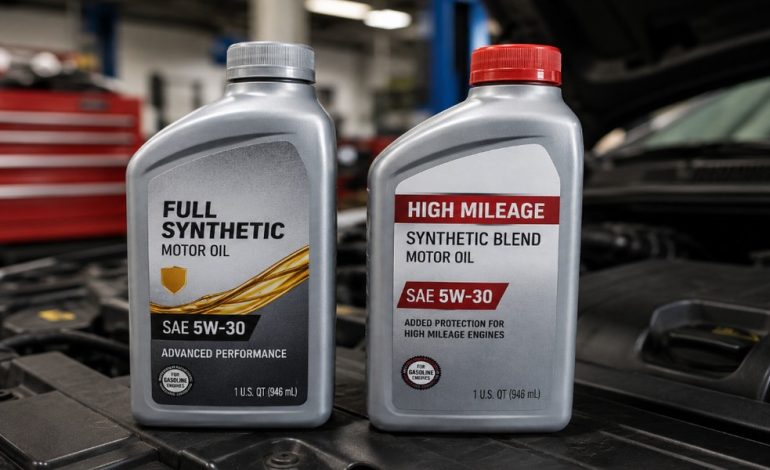
High-mileage oil is made for older engines or vehicles with higher mileage. Many drivers consider switching once the vehicle reaches around 75,000 miles, though mileage alone is not the only factor.
The main difference is in the additives. High-mileage oil usually contains special conditioners that help soften and refresh aging rubber seals and gaskets. Over time, engine seals can dry out, shrink, or become less flexible. When that happens, small leaks may begin.
High-mileage oil also often includes extra detergents, anti-wear additives, and friction modifiers. These ingredients are meant to help older engines stay cleaner and better protected.
How High-Mileage Oil Helps Older Engines
Older engines deal with more wear than newer ones. Small gaps may form between internal parts. Seals may harden. Oil consumption may increase. Sludge and deposits may build up inside the engine.
High-mileage oil helps in a few ways.
First, it can reduce minor oil leaks by helping seals stay more flexible. It will not repair a broken gasket or major leak, but it may slow small seepage.
Second, it can help reduce oil burn-off. Some older engines consume oil because internal parts have worn over time. High-mileage formulas may help control that better than regular oil.
Third, the added cleaning agents can help reduce sludge. Sludge is thick, dirty buildup that can form when oil breaks down or when oil changes are delayed. Cleaner oil flow helps protect the engine.
Fourth, extra anti-wear protection can support parts that have already seen years of use.
Does Every Older Vehicle Need High-Mileage Oil?
Not always. A vehicle with 80,000 or 100,000 miles may still run perfectly on regular oil if the engine is clean, dry, and not burning oil. Some engines age better than others. Maintenance history matters too.
If a vehicle has been well maintained, uses the correct oil, and shows no signs of leaks or oil loss, regular oil may still be fine. But if the engine has minor leaks, higher oil consumption, or signs of aging, high-mileage oil may be worth considering.
The best guide is the vehicle owner’s manual, along with the actual condition of the engine.
Can High-Mileage Oil Fix Engine Problems?
This is where drivers need to be realistic. High-mileage oil can help manage normal engine wear, but it is not a magic repair.
It will not fix a damaged engine. It will not seal a major leak. It will not repair worn piston rings, bad valve seals, or a failing head gasket. It can help reduce symptoms in some cases, but serious problems still need proper repair.
Think of high-mileage oil as support for an aging engine, not a cure for mechanical failure.
Is It Safe to Switch to High-Mileage Oil?
In most cases, yes. If the oil matches the viscosity and specifications recommended for your vehicle, switching to high-mileage oil is usually safe.
Some drivers worry that switching oil types will hurt the engine. For most modern oils, that is not a major concern. What matters most is using the correct grade and changing it at the right interval.
If you switch and notice unusual leaks, noise, or oil pressure warnings, have the vehicle checked. But for many older vehicles, the switch is smooth.
What About Synthetic High-Mileage Oil?
Synthetic high-mileage oil combines the benefits of synthetic oil with additives designed for older engines. It often provides better temperature protection, cleaner performance, and longer-lasting stability than conventional oil.
This can be a good option for drivers who want stronger protection, especially in hot climates, stop-and-go traffic, or frequent highway driving.
Final Thoughts
High-mileage oil and regular oil are not the same. High-mileage oil contains additives designed to help older engines with seal care, oil consumption, sludge control, and wear protection. For vehicles with higher mileage or early signs of aging, it can be a smart choice.
Regular oil still works well for many vehicles, especially newer engines or older engines that are still in great condition. The key is choosing oil that matches the vehicle’s needs.
If your car has more miles, small leaks, or uses oil between changes, high-mileage oil may offer extra support. It will not turn back time, but it can help an older engine run cleaner, smoother, and with better protection for the road ahead.
This post was written by a professional at Tires2Go Florida. Tires2Go Florida is a trusted automotive service center located in Pinellas Park, Florida, serving drivers across St. Petersburg, Tampa, Clearwater, and Largo. Our certified mechanics handle tire and wheel replacement, brake service, suspension repairs, oil changes, wheel alignment Tampa, tire balancing, and road force balancing. We also specialize in ADAS calibration, suspension modifications, lift kits, and lowering kits using quality parts and modern diagnostic equipment. From routine maintenance to advanced automotive services, Tires2Go Florida provides dependable solutions and tires for sale for vehicles throughout the Tampa Bay area.