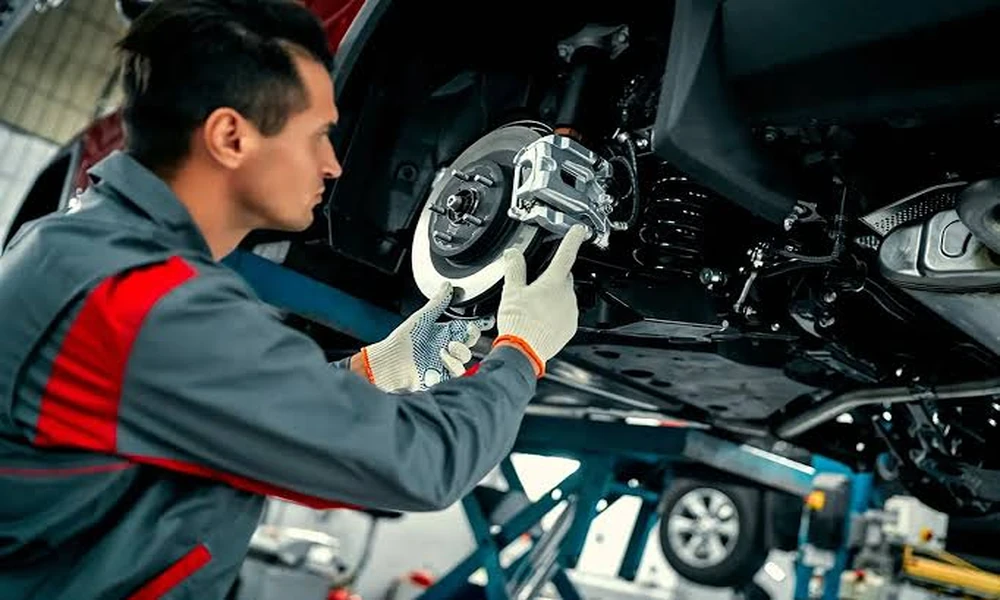
Complete Guide on How Audi’s Quattro System Affects Post-Accident Repair Procedures


When an Audi equipped with Quattro is involved in a collision, the repair process is far more complex distinguished to a standard two-wheel-drive vehicle. Whether the accident is minor or major, the appearance of Quattro introduces supplementary mechanical considerations, adjustment requirements, and demonstrative steps that technicians like EAS Tire & Auto repair must follow to fix the car to mill condition.
This article defines how Audi’s Quattro system influences post-calamity repair procedures and explains why specialized information is critical to upholding the vehicle’s depiction and safety.
Understanding the Quattro System’s Complexity
Audi’s Quattro is not just a typical AWD scheme. It is a finely tuned combination of machinelike components, electronic control units, and torque distribution plans. Depending on the model, Quattro can be:
- A Torsen (torque-appreciating) center differential
- A Haldex electronically regulated coupling (more coarse in compact models)
- A sport differential for act variants
- A blend of front, rear, and center differentials working together
Because this order distributes capacity to all four wheels, even a small accident can affect diversified drivetrain components. For example, a front-impact accident may seem beautiful, but the force can travel through the subframe and influence the angle or condition of the driveshaft, differentials, or axles. You can also visit shops for Auto Repair in Wheatridge, CO.
This interconnected design makes Quattro-equipped Audis more sensitive to fundamental alignment and drivetrain precision afterwards an accident.
How Drivetrain Components Are Affected After a Collision
A hit to the front abundant or the frame area can upset:
- Driveshaft alignment
- Front characteristic housing
- Axles and CV intersections
- Engine mounts and transmission mounts
- Subframe geometry
Even when the damage seems superficial, the AWD order may demand inspection to guarantee torque is being delivered correctly.
Quattro Requires Precise Alignment After Repairs
Regular two-wheel-drive cars need alignment after an accident, but an Audi with Quattro needs all four wheels joined with better accuracy. AWD schemes demand symmetry; alternatively, the drivetrain will constantly fix uneven forces.
Improper alignment can bring about:
- Increased drivetrain wear
- Uneven tire wear
- Steering attract
- Excessive vibration
- Hesitation all the while acceleration
- Poor fuel adeptness
- Stress on the center differential
Technicians must use Audi-certified alignment specifications and leading alignment machines to guarantee all four wheels are perfectly measured.
Why Specialized Technicians Are Required
Repairing an Audi with Quattro by experts like EAS Tire & Auto repair is not the same as repairing a basic AWD or FWD ride. Specialized technicians understand:
- Audi-distinguishing torque qualifications
- Differential alignment processes
- Coding and calibration steps
- Drivetrain geometry
- Subframe positioning
- Diagnostics using Audi-certified tools
Incorrect repairs can bring about long-term drivetrain damage, weakened performance, or a lasting loss of Quattro’s signature handling.
Conclusion
Audi’s Quattro system is individual of the most leading AWD setups in the automotive world, contributing unmatched support and confidence on the road. From drivetrain inspections to electronic recalibration, each step must be performed by technicians the one understand the system’s complicatedness.